
34 millimetres: why the small watch has come back
For twenty years a 34 mm man's watch looked like a woman's. The big brands are making them again, and those from the sixties never stopped wearing well.
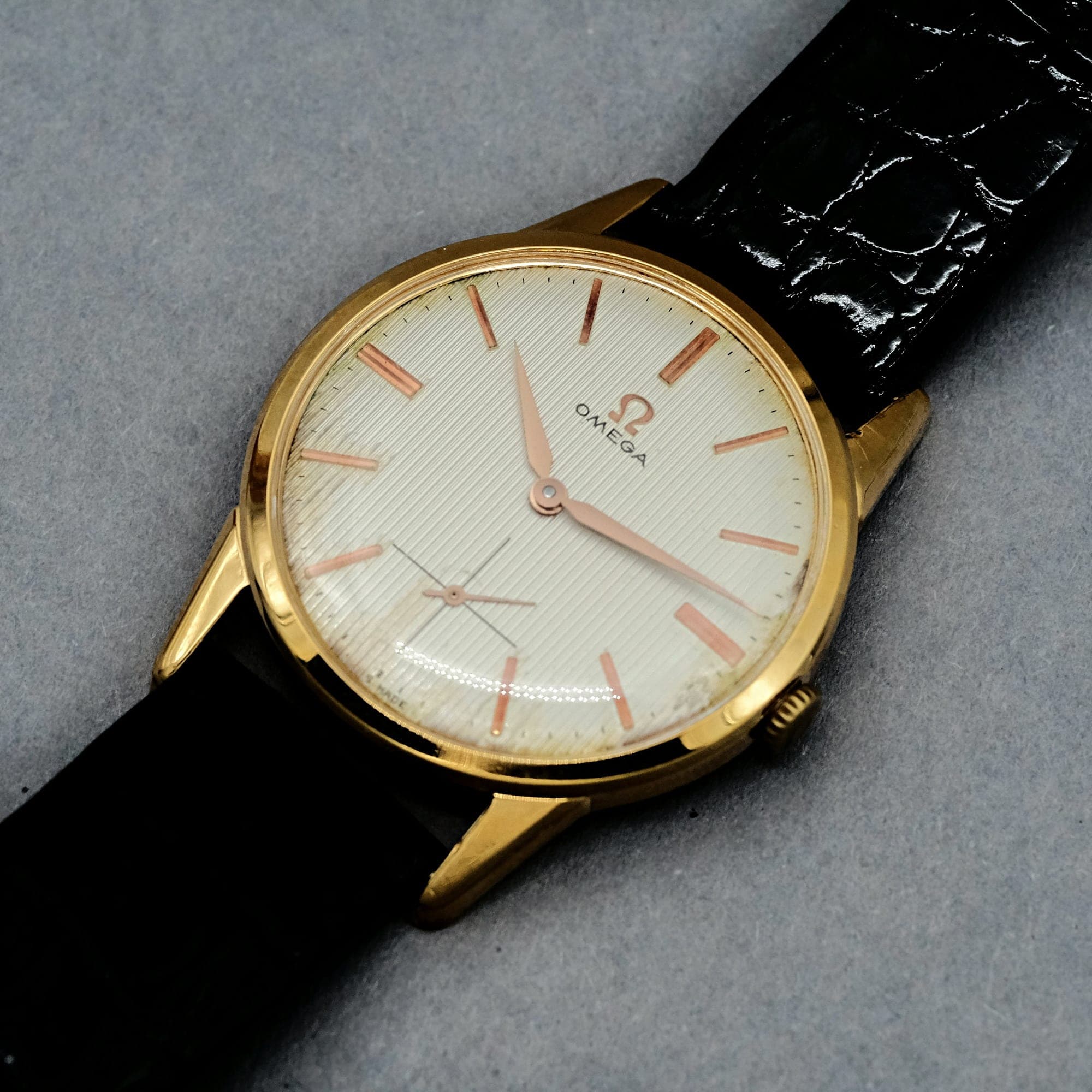
When we measured the small-seconds Omega we have in the vitrine, the calliper read 34.0 millimetres. For two decades, the market read a figure like that as a lady's size. Not any more. Right now we have five small dress watches, all from the fifties and sixties, and none of them needs to apologise for its size.
What was normal
For much of the twentieth century, a man's watch measured what now seems small to us. Henry Black explained it in Fratello in September 2026: cases grew from a range of 33 to 38 mm, which was that of a normal man's watch, to the 40 mm or more that now reads as standard. He recalls that the Rolex Oyster Perpetual and the Nivada Grenchen Antarctic, tool watches from the years of the great expeditions, had cases of 35 or 36 mm.
The growth was gradual and can be seen within a single family. It shows clearly in IWC's pilot's watch: the Mark XII of the early nineties measured 36 mm, the Mark XV of 1999 moved to 38, and the Mark XVI and XVII that came after reached 39 and 41. The step from 36 to 38 was one of the smallest in its history and barely shows on the wrist; it was the sum of small steps that ended up changing the size.
What has changed
The clearest gesture came from Rolex in April 2021: the new Explorer came down from the 39 mm of the previous model to 36, exactly the size of the original 1953 Explorer. Tudor followed a similar line with the Black Bay 54, at 37 mm, which takes its proportions from the 1954 Oyster Prince Submariner.
It is not a fashion that arrived all at once. In 2017 the specialist press was already reporting that the trend for cases of 46 mm or more was waning, and listed launches from that year at around 40 mm or less, among them IWC's Da Vinci Automatic, offered in 40 and in 36 mm. That same year Panerai finally added 42 mm options to its Submersibles, and Omega brought back smaller sizes with its Trilogy sets. Not everyone was going the same way: that year Rolex took its Sea-Dweller to 43 mm.
Why a small watch wears well
The reasons Black gives have little to do with nostalgia and a lot to do with proportion. A 36 mm Oyster Perpetual can look larger on the wrist than a 40 mm sports watch, because it has no bezel or crown guards taking space from the dial. And on a 40 mm Explorer, he says, the dial can look slightly sparse for the size of the case. It is no accident that Rolex still offers the Oyster Perpetual in several sizes, among them 34 and 36 mm.
The same is true of dress watches from the sixties, and it shows clearly with ours on the bench. Almost all have a very thin bezel, so the dial fills nearly the whole diameter. Most have 18 mm lugs, which is what the calliper reads on the Omega, the Longines and the 35 mm Certina; the Universal Genève takes 17.
There is a caveat we share: this is not about every watch having to shrink. A large wrist wears a large watch well. What has changed is that a 34 mm watch is no longer seen as the wrong size.
What to know before buying one
A small watch from the sixties is almost always hand-wound, and that means winding it every morning. Many are gold-plated with a steel back, like the Omega and the Longines we have; plating wears at the edges and lugs, and it is not repaired by polishing. And the crystal is usually acrylic, which scratches easily but can also be polished.
It is also worth thinking about diameter together with lug-to-lug length and thickness. Two 34 mm watches can wear very differently depending on how long the lugs are and how high they sit on the wrist. Tudor's Black Bay 54 illustrates it: its 46 mm lug-to-lug length is what lets it sit neatly on smaller wrists. The best thing is to try them on, and if that is not possible, to ask for the lug-to-lug measurement.
On ours, the details visible in the photos say something about each house. The Omega has a signed crown with the omega in relief, and its dial is not plain: it has a fine vertical ribbing that appears as soon as light crosses it. The Longines carries the winged hourglass applied in gilt. The Universal Genève carries the shield with the U on its crown. And on the case back of the small Certina you can read its engraved reference, 1101 056.
In the vitrine
At the moment there are five. Four, from smallest to largest: a steel Certina from around 1960, 30 mm with 16 mm lugs, with a silvered dial, applied numerals at 12, 3, 6 and 9 and centre seconds. A steel Universal Genève, 33 mm, with a heavily mottled cream dial that the listing describes plainly. The small-seconds Omega, 34 mm and gold-plated, with a vertically lined dial and rose-gold markers. And a small-seconds Certina from around 1958, 35 mm, with a cream dial and applied gilt numerals. The fifth is the small-seconds Longines, also plated. All hand-wound, and each with a listing that says what it has and what it lacks.
The pieces in this article
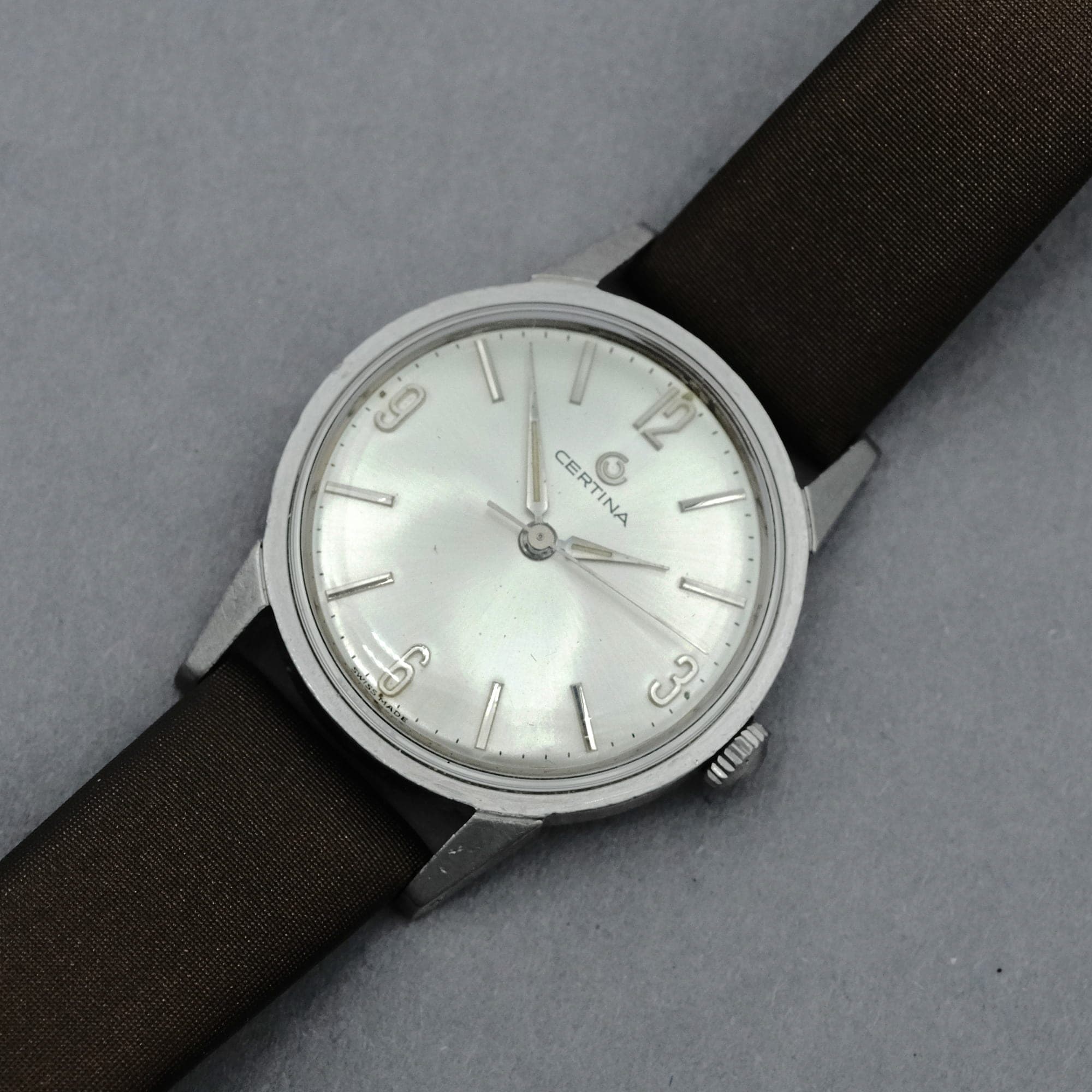
Certina Clásico pequeño de acero
c. 1960
150 €
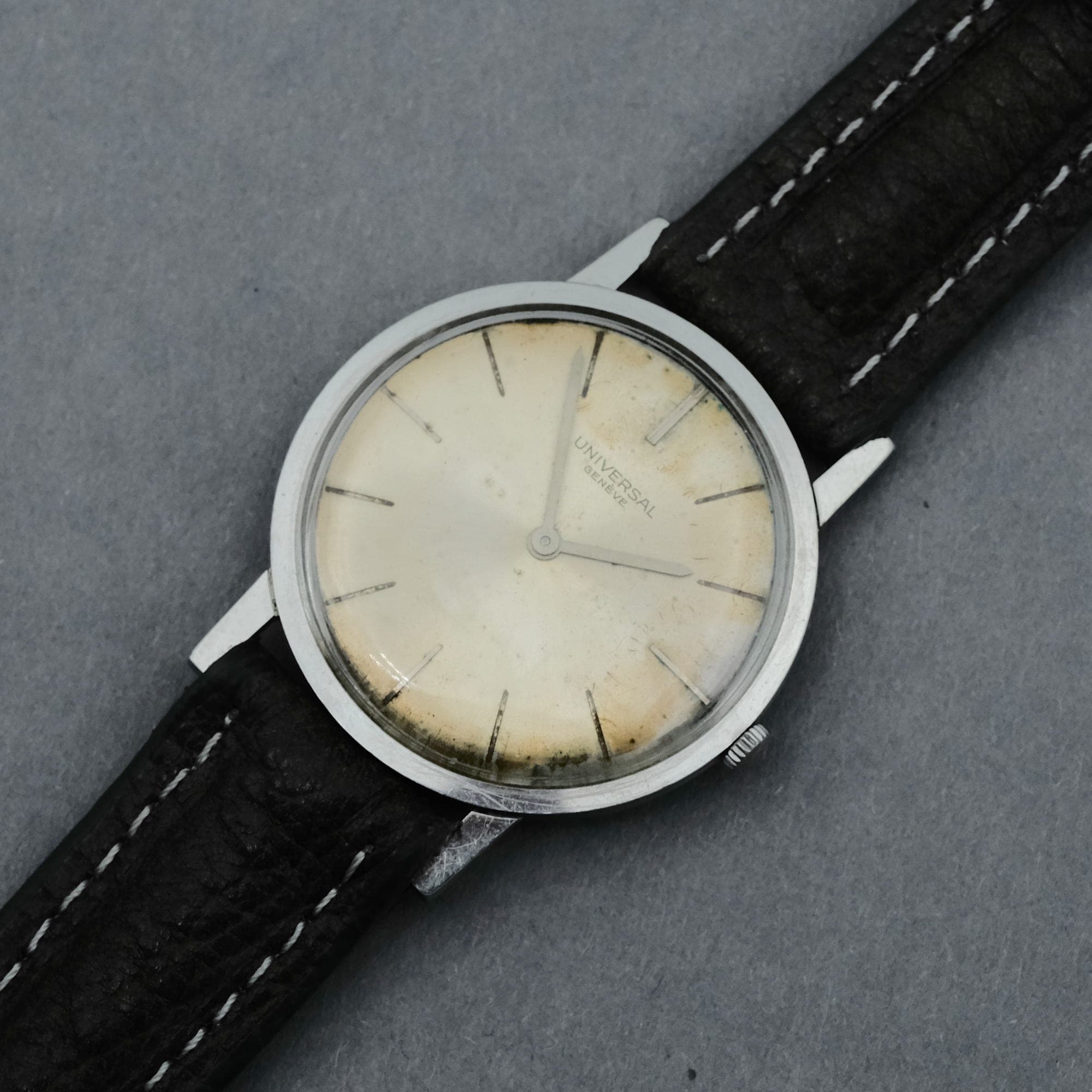
Universal Genève Clásico de acero
c. 1960
400 €
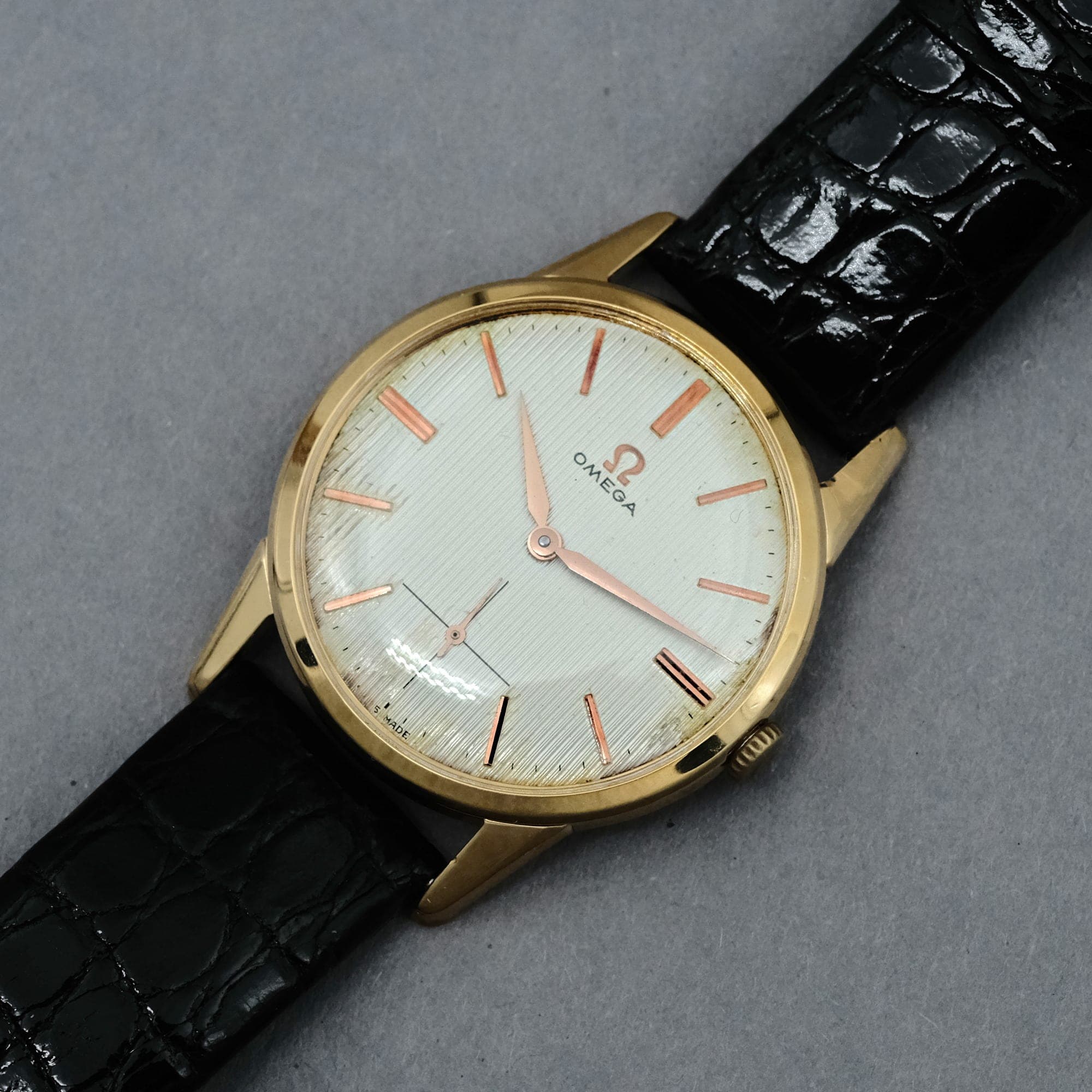
Omega Clásico segundero pequeño
c. 1960
675 €
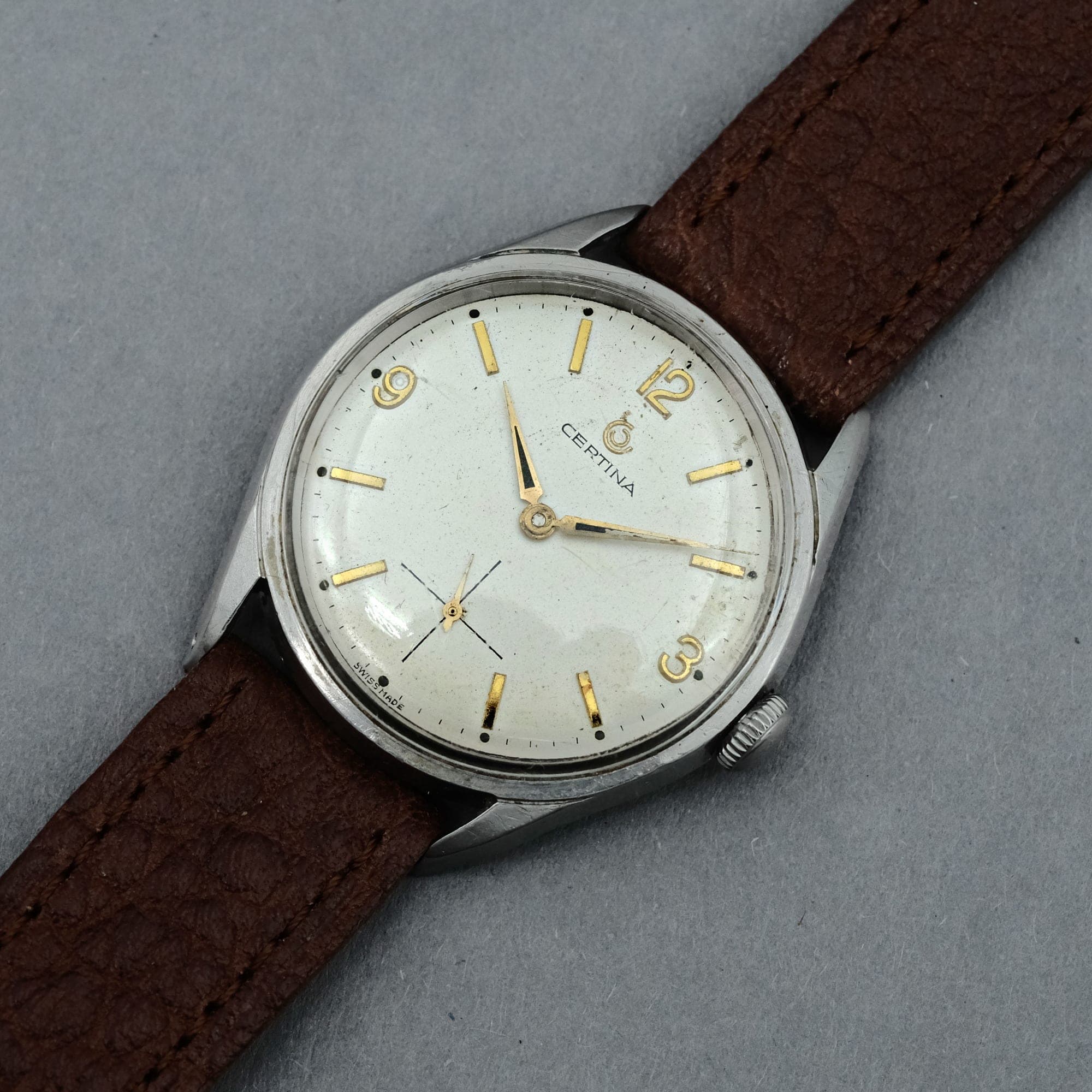
Certina Clásico acero segundero pequeño
c. 1958
200 €
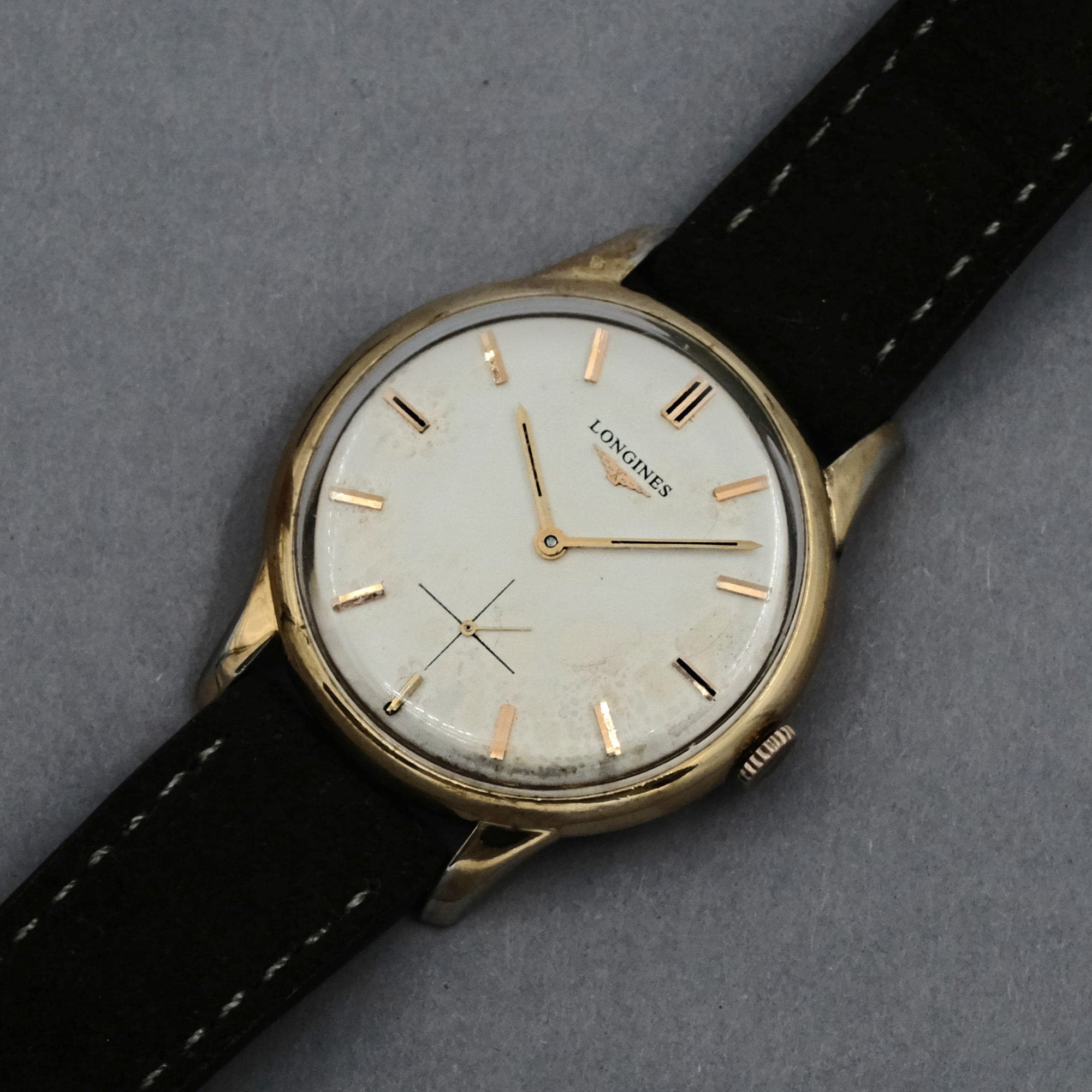
Longines Clásico segundero pequeño
c. 1960
450 €
About the brand
Cartas sobre relojería, de tanto en tanto.
Sin spam. Baja cuando quieras. Privacidad.