

Your Grandfather's Watch That Was Worth More Than a Rolex: The Surprising Story of DOGMA, the Silent Luxury of the European Middle Class
Madrid, 1955. A jewelry store on Gran Vía.
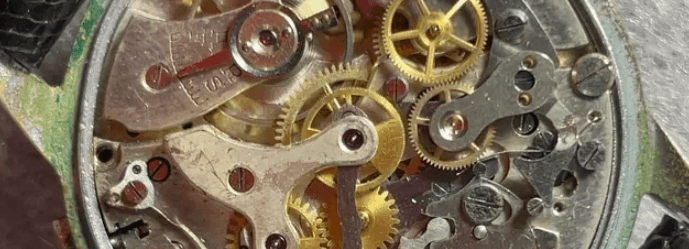
A young graduate enters with his first saved paycheck. He can’t afford an Omega or a Longines, but he wants a “real” Swiss watch. The salesman smiles and pulls out a golden case: “DOGMA PRIMA, sir. Antimagnetic, 15 jewels, made in La Chaux-de-Fonds. The same movement used by brands three times more expensive.”
The young man leaves with his DOGMA on his wrist, unaware he’s just purchased what collectors 70 years later would call “Swiss watchmaking’s best-kept secret.” A watch that didn’t boast of luxury, but of something more valuable: pure mechanical honesty.
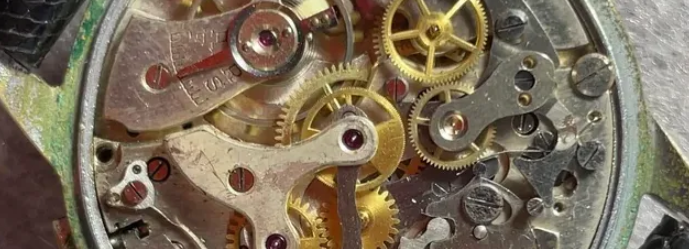
Today, while millionaires fight over vintage Rolexes, connoisseurs quietly hunt for DOGMA PRIMAs in flea markets and antique shops. Because DOGMA represents something the modern industry has forgotten: that a good watch doesn’t need to cost a fortune to last a lifetime.
The Brand Born to Democratize Switzerland
1909: Siegmund Neumann and the Impossible Vision
Siegmund Neumann was a jeweler with businesses in Basel and Luxembourg who had a radical idea: create genuine Swiss watches for the working class. Not cheap watches, but honest watches. The difference is crucial.
In 1909, he registered “DOGMA” in La Chaux-de-Fonds, the Silicon Valley of watchmaking. His neighborhood included Longines, Universal Genève, and Eberhard. But while they targeted the aristocracy, DOGMA aimed at the schoolteacher, the civil servant, the small shopkeeper.

The Name That Said It All
“DOGMA” was no accident. A dogma is a fundamental, unquestionable truth. The message was clear: this is a real watch, without tricks or pretensions. Real Swiss movement. Real jewels. Real precision. Just without paying the “prestige tax.”
The Golden Age: When DOGMA Conquered Europe
The 1930s-40s: Watches for War
During World War II, DOGMA quietly manufactured watches for the armed forces. They weren’t the glamorous British “Dirty Dozen” or the famous German Langes. They were inglorious watches: Landeron movements for the Luftwaffe, A. Schild calibers for the Wehrmacht.
These military DOGMA watches are historical ghosts. They occasionally appear at auctions, without fanfare, bought by collectors who know what they have: mechanical testimonies of untold history.
1949: The Renaissance with Arthur Dorsaz
After the war, Fabrique d’Horlogerie Arthur Dorsaz & Cie. acquired DOGMA with a clear vision: to make it the brand of European reconstruction. Not for the rich who hadn’t suffered, but for the generation rebuilding the continent.
The new logo, registered in 1949, included a brilliant motto: “Toujours imitée, jamais égalée” (Always imitated, never equaled). It was an ironic wink: while others boasted of exclusivity, DOGMA boasted of being so good that everyone copied it.
DOGMA PRIMA: The Watch That Defined a Generation
Anatomy of an Overlooked Classic
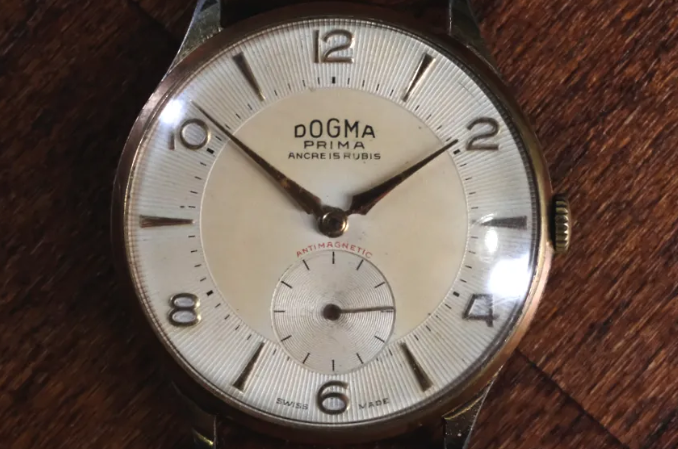
The DOGMA PRIMA, launched in the late 1940s, was a masterpiece of pragmatic engineering:
“Ancre 15 Rubis” Movement: Based on the ETA 1120 or AS 1188, the same calibers used by luxury brands
36-38mm Case: Perfect for the masculine wrist of the era
Antimagnetic: Cutting-edge technology when industrial magnetic fields were a real threat
10 Microns of Gold: Enough to last decades, not centuries (because who needs an eternal watch?)
The Spanish Military Service Watch
In Spain, the DOGMA PRIMA became THE military service watch. Thousands of young men received one as a gift before their “mili” (mandatory military service). It was a rite of passage: your first Swiss watch, your entry into adulthood.
Veterans tell that in the barracks there was an unofficial hierarchy:
- The rich wore Omega or Longines
- The smart ones wore DOGMA (”same movement, half the price”)
- The rest wore Cauny or Festina
The DOGMA was the sweet spot: respectable without being ostentatious.
The Perfect Engagement Gift
In the 1950s-60s, giving a DOGMA PRIMA was a serious declaration of intent. It didn’t say “I’m rich” (that was vulgar). It said “I’m responsible, practical, and I know how to recognize real value.” It was the watch the father-in-law approved of.
The Technical Secrets Nobody Tells
The Mystery of “Ancre 15 Rubis”
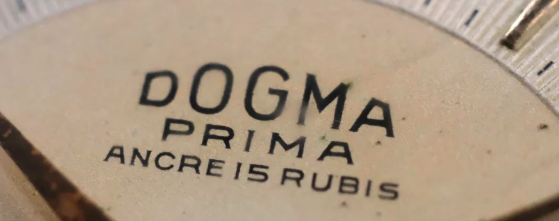
“Ancre 15 Rubis” was more than technical specifications. It was a code. It meant you had the classic Swiss escapement system (ancre = anchor) with 15 synthetic rubies reducing friction. It was exactly the same system as a Patek Philippe, just without the Geneva Observatory certificate.
DOGMA was clever: they didn’t compete on prestige, they competed on pure physics.
The Hidden Elite Calibers
What few know is that DOGMA used elite movements:
- ETA 1080: The same as Tudor and Oris
- AS 1188: Used by Omega in some models
- Unitas 6300: The tank of Swiss movements
- Landeron chronographs: The same as Heuer
You bought a DOGMA for 1,000 pesetas and got the same mechanical heart as a 5,000-peseta watch. It was the industry’s worst-kept secret.
The Antimagnetic That Actually Worked
While other brands put “Antimagnetic” as an advertising claim, DOGMA actually implemented it. They used Nivarox hairsprings, a revolutionary alloy resistant to magnetism.
Electricians, radio operators, industrial mechanics: all trusted DOGMA. There are testimonies of watches that survived working next to electrical generators for decades.

The Quartz Crisis and the Silent End
1972: The Last Breath
In 1972, Aubry Frères SA bought the rights to DOGMA. It was a futile gesture. The quartz crisis showed no mercy, and DOGMA, which had always competed on value, couldn’t compete with a Casio that cost 10 times less.
DOGMA died as it lived: without drama, without spectacular bankruptcy. It simply stopped making watches. The last PRIMAs left La Chaux-de-Fonds in silence, like workers retiring after a lifetime of honest service.
2008: The Failed Resurrection Attempt
A Madrid company tried to revive DOGMA in 2008. They used the old logo but with generic Chinese movements. Collectors considered it a desecration. It lasted less than a breath.
The message was clear: DOGMA wasn’t just a logo, it was a philosophy that couldn’t be replicated in the modern era of planned obsolescence.
The Underground Renaissance: Why DOGMA Matters Today
The Secret Market of the Initiated
Today, a DOGMA PRIMA in good condition costs between 150-300€. For context: it has the same movement as a vintage Omega that costs 2,000€. Smart collectors know this.
On specialized forums, DOGMA has cult status. It’s not the watch you show on Instagram. It’s the watch you wear because you know. It’s reverse signaling: while others shout wealth, you whisper knowledge.
DOGMA’s Lesson for Modern Watchmaking
DOGMA proved something revolutionary: that quality doesn’t need marketing. That mechanical honesty has its own value. That sometimes, the best watch isn’t the most expensive, but the most sincere.
In an era where a Rolex Submariner costs 15,000€ on the gray market, DOGMA reminds us that real value isn’t in the logo, but in the movement. That a well-adjusted ETA is a well-adjusted ETA, whether it costs 200€ or 2,000€.
The DOGMA in the 21st Century: Why You Should Look for One
If you find a DOGMA PRIMA at a flea market, buy it. Not as an investment (though it will probably appreciate), but as a statement. It’s the anti-Rolex, the anti-hype, the anti-Instagram.
It’s the watch that says: “I understand real watchmaking. I don’t need to impress anyone. I know what I have.”
A Reflection on True Value
At KLASSE, when we receive a vintage DOGMA—especially a PRIMA in original condition—we treat it with the same respect as a Patek. Because we understand something fundamental: timeless elegance isn’t in the price, but in the integrity.
DOGMA represented the best of industrial capitalism: honest products at honest prices for honest people. No tricks, no inflated marketing, no artificial “exclusivity.” Just a good watch that did what it promised: tell time with Swiss precision for generations.
“Always imitated, never equaled” wasn’t arrogance. It was a fact. Because you can copy the specifications, but you can’t copy the soul of a brand that chose function over fame, substance over style, durability over desire.
In a world obsessed with conspicuous luxury, DOGMA reminds us that true luxury is invisible: it’s the movement that beats in silence, decade after decade, without asking for recognition or applause. Just doing its job.
Like that young man in 1955 on Gran Vía, who bought a watch thinking it was a compromise. Without knowing he was actually buying a piece of mechanical history that would survive empires, crises, and trends.
Because in the end, that’s what a true DOGMA does: endure.
Do you have a DOGMA at home? Did you know about this hidden gem of Swiss watchmaking? Share your story with these mechanical survivors in the comments. And if you find one in a forgotten drawer, don’t sell it. Take it for service. You’ll be surprised what an honest watch can teach you about real time.
Cartas sobre relojería, de tanto en tanto.
Sin spam. Baja cuando quieras. Privacidad.