

When Omega Bet on the Future and Lost: The Fascinating History of Swiss Quartz
The Cursed Pin: Chronicle of Omega's Most Collectible Failure
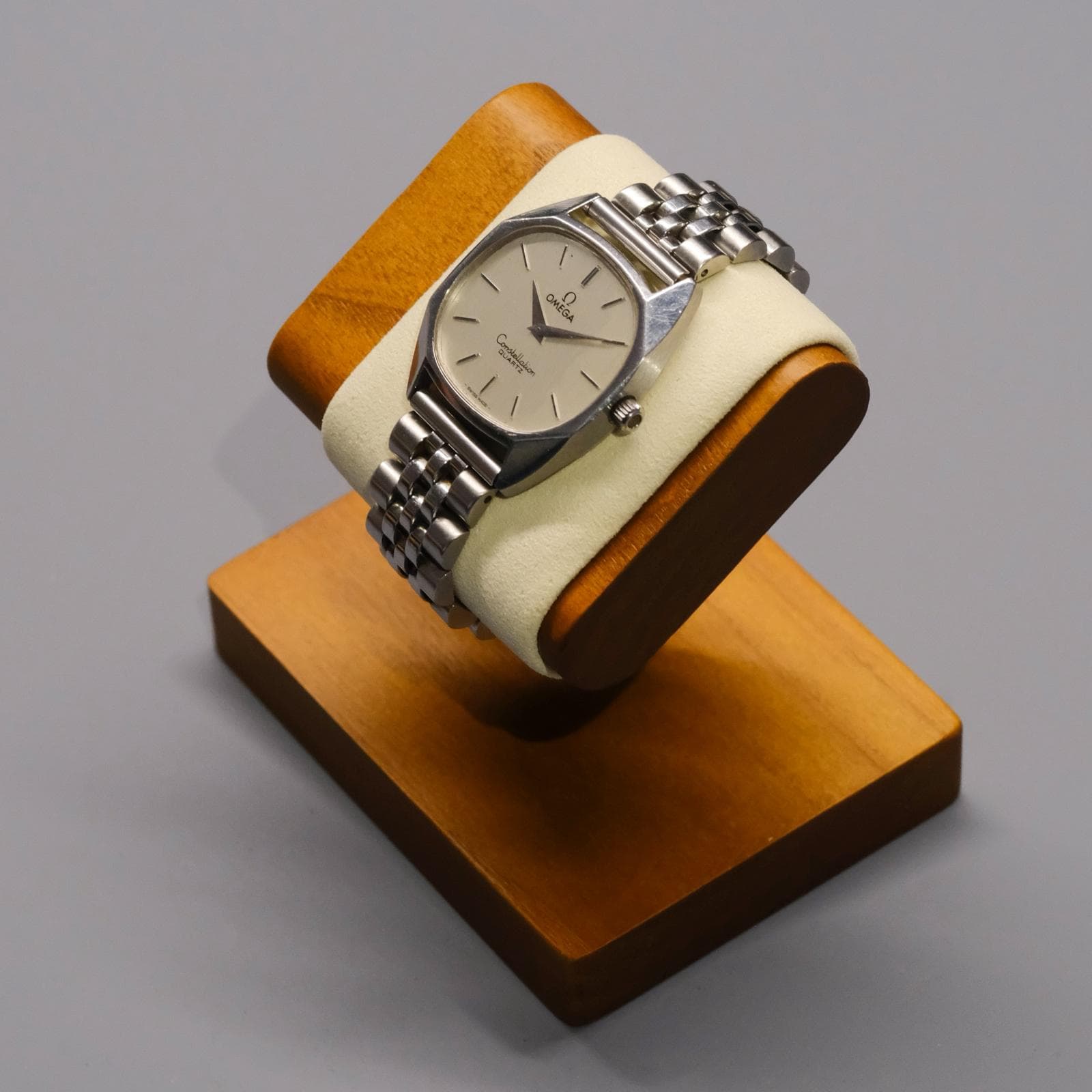
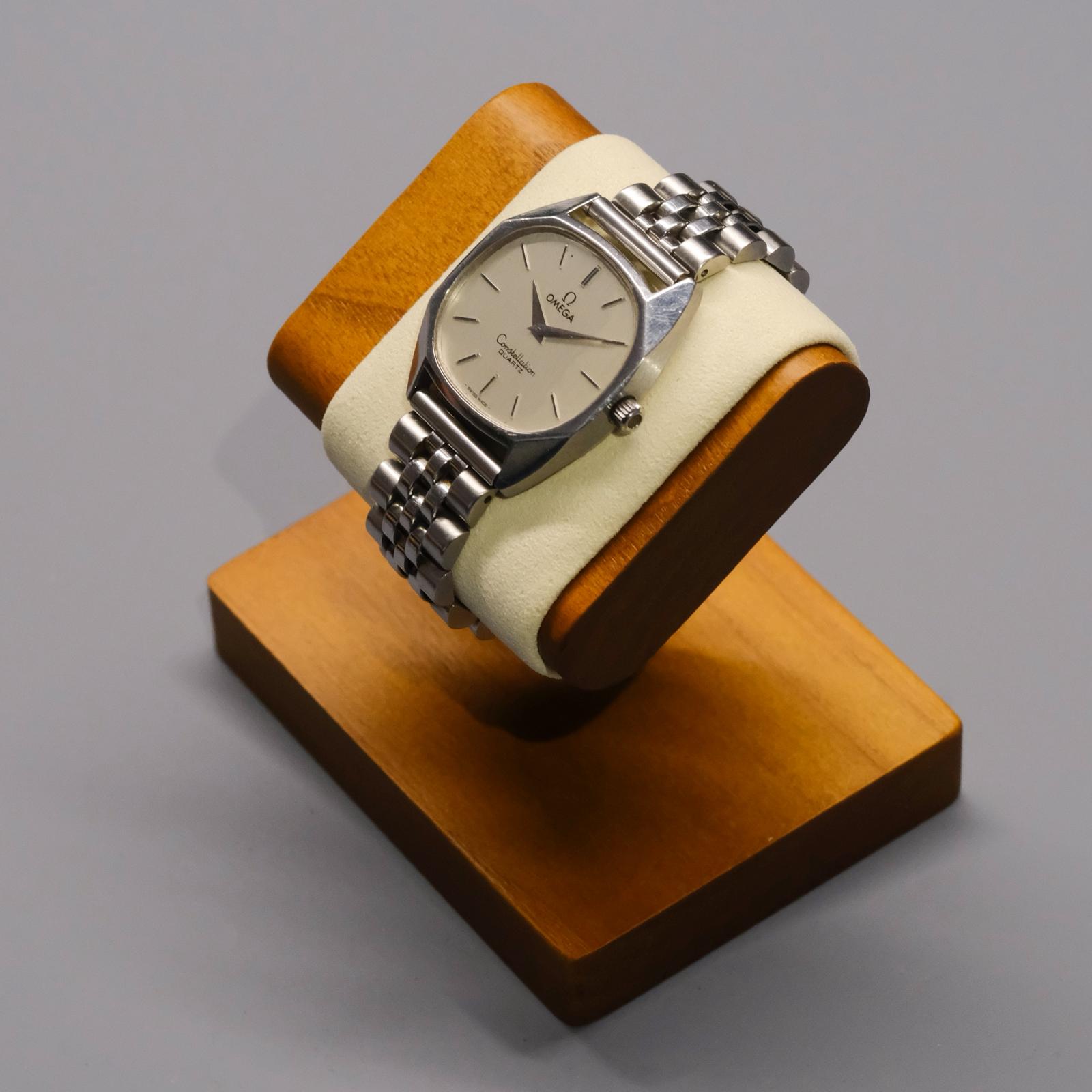
Between 1970 and 1985, Omega waged a technological battle against the Japanese quartz tsunami that nearly destroyed Swiss watchmaking. Their response was a series of innovative but problematic electronic calibers, notably the "setting by contact" system with a hidden pin in the crown that confused users and destroyed modules. The Marine Chronometer (1974) achieved ±12 seconds/year precision, surpassing any marine standard, but failed commercially. Today, these technical "failures" are cult pieces documenting the Swiss industry's most vulnerable moment. This story reveals how forced innovation can create fascinating objects: technically superior, commercially disastrous, and historically invaluable. The Day a Swiss Watchmaker Cried at His Workbench
December 1969, Bienne
Georges Braunschweig, Omega master watchmaker with 30 years of experience adjusting hairsprings, holds in his hands a tiny vibrating crystal. No bigger than a grain of rice. It vibrates 32,768 times per second with a precision no compensated balance wheel could ever achieve. News of the Seiko Astron has just arrived from Tokyo.
“At that moment I knew that everything I had learned was worth less than that three-franc crystal.”
It wasn’t just the end of an era; it was the beginning of the strangest war watchmaking had ever known: Switzerland versus Japan, tradition versus technology, soul versus silicon.
The Desperate Response: Beta 21 and the Panic Consortium
1970: Twenty Competitors, One Enemy
In an unprecedented move, twenty Swiss manufacturers—including historic rivals like Omega, Rolex, and Patek Philippe—united to develop the Beta 21, the first Swiss quartz movement. It was as if Ferrari, Lamborghini, and Porsche decided to build a car together to compete against Toyota.
The result was as Swiss as it was absurd:
- Size: Enormous, almost 8mm thick
- Price: 20 times more expensive than a Seiko
- Consumption: Battery lasted one year (the Japanese promised 3)
- Precision: Excellent, but no better than Asian competition
Omega needed something of their own, something that said “we’re different.” And thus was born one of the strangest decisions in watchmaking history.
The Pin of Discord: Setting by Contact
The Innovation That Killed Thousands of Watches
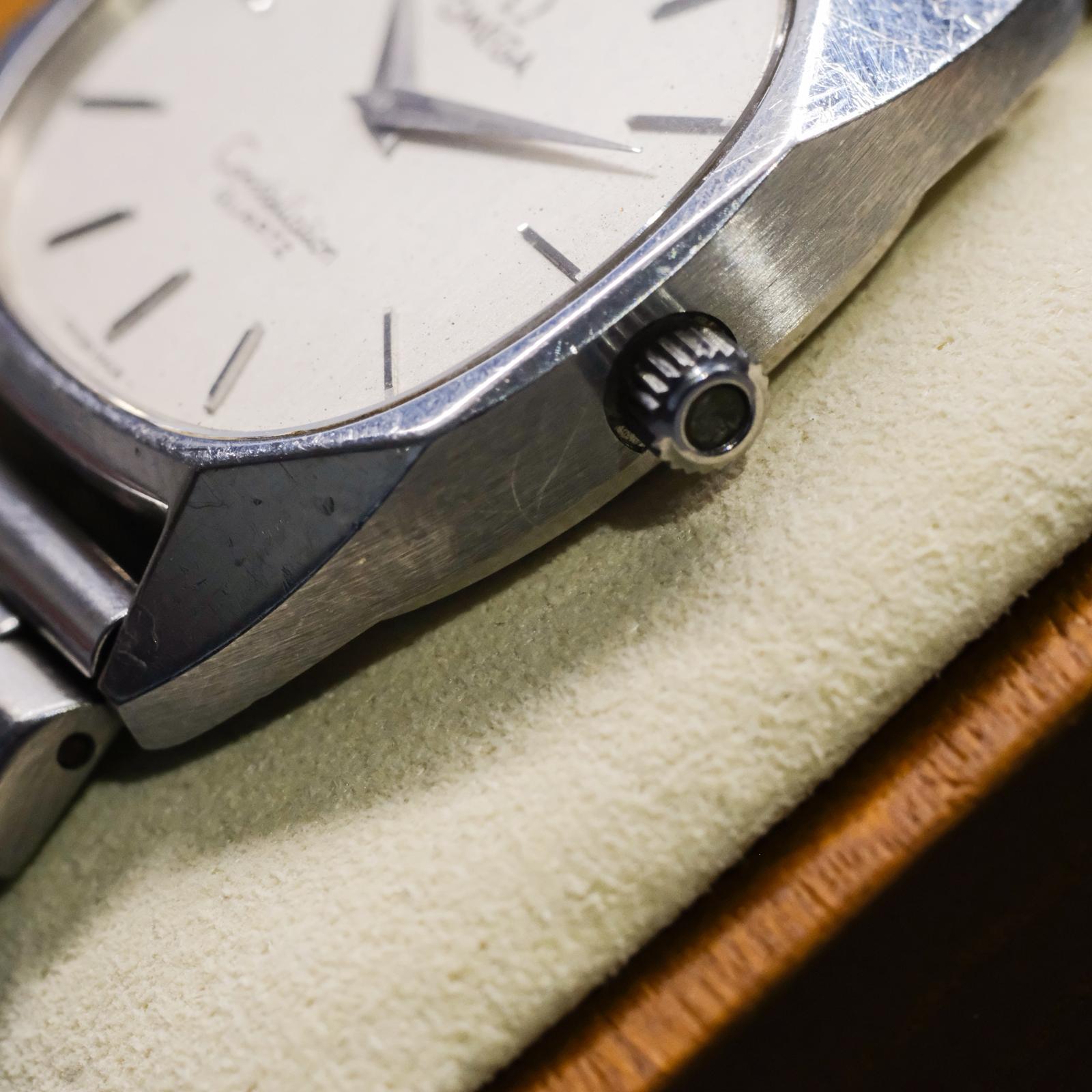
In 1977, Omega engineers presented their “elegant” solution to the problem of setting a quartz watch: eliminate the traditional crown. Caliber 1342 introduced “setting by contact”: a tiny pin hidden in the side of the crown that, when pressed with a pointed object, allowed time and date adjustment.
The theory was brilliant:
- Crown always sealed = better water resistance
- Fewer moving parts = less wear
- Cleaner appearance = futuristic design
The practice was catastrophic:
Manual for Involuntary Destruction
Users, accustomed to pulling the crown, forced it. Crack. Dead module.
Others found the pin by accident and pressed it with whatever was at hand. A paperclip. A key. A knife. Each inappropriate object was an electronic death sentence.
The most creative tried to “fix” the watch when they didn’t understand the system. Local watchmakers, without documentation, opened them like normal watches. More dead modules
.
The Marine Chronometer: Misunderstood Perfection
1974: The World’s Most Precise Watch That Nobody Understood
If caliber 1342 was the commercial disaster, the Marine Chronometer (calibers 1511/1516) was Omega’s Greek tragedy.
It was the most precise wristwatch ever certified for marine use. Its 2.36 MHz frequency was 72 times higher than standard. The square brushed steel case looked carved from a meteorite. The deep blue dial recalled the ocean it intended to conquer.
And it was an absolute commercial failure.
Why the Best Lost
- Alien design: The square “stone” case was too radical for 1974
- Prohibitive price: Almost the price of a mechanical Rolex
- Confusing marketing: Who needed marine precision on land?
- Impossible maintenance: Only Bienne could repair it
The Crisis Deepens: 1980-1985
The Disaster Numbers
By 1983, the situation was apocalyptic:
- Swiss industry employees: From 90,000 (1970) to 30,000 (1983)
- Disappeared brands: Over 1,000 manufacturers closed
- Market share: Switzerland fell from 50% to 15% globally
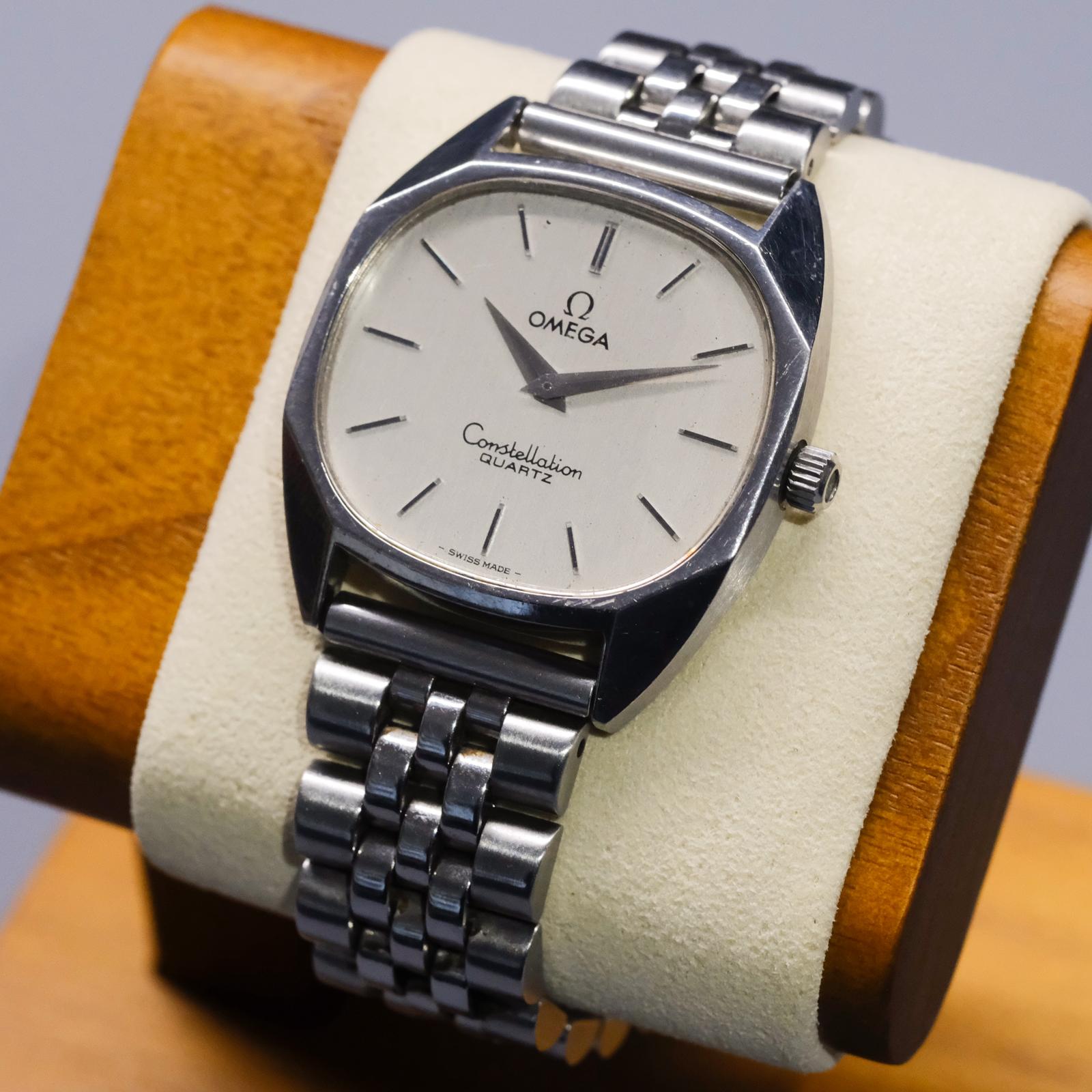
Omega tried to simplify with calibers 1420/1430: traditional crown, fewer functions, greater reliability. But the damage was done. The public associated Omega Quartz with problems
.
The Unexpected Turn: Modern Collecting
2015: The Renaissance of the Rejected
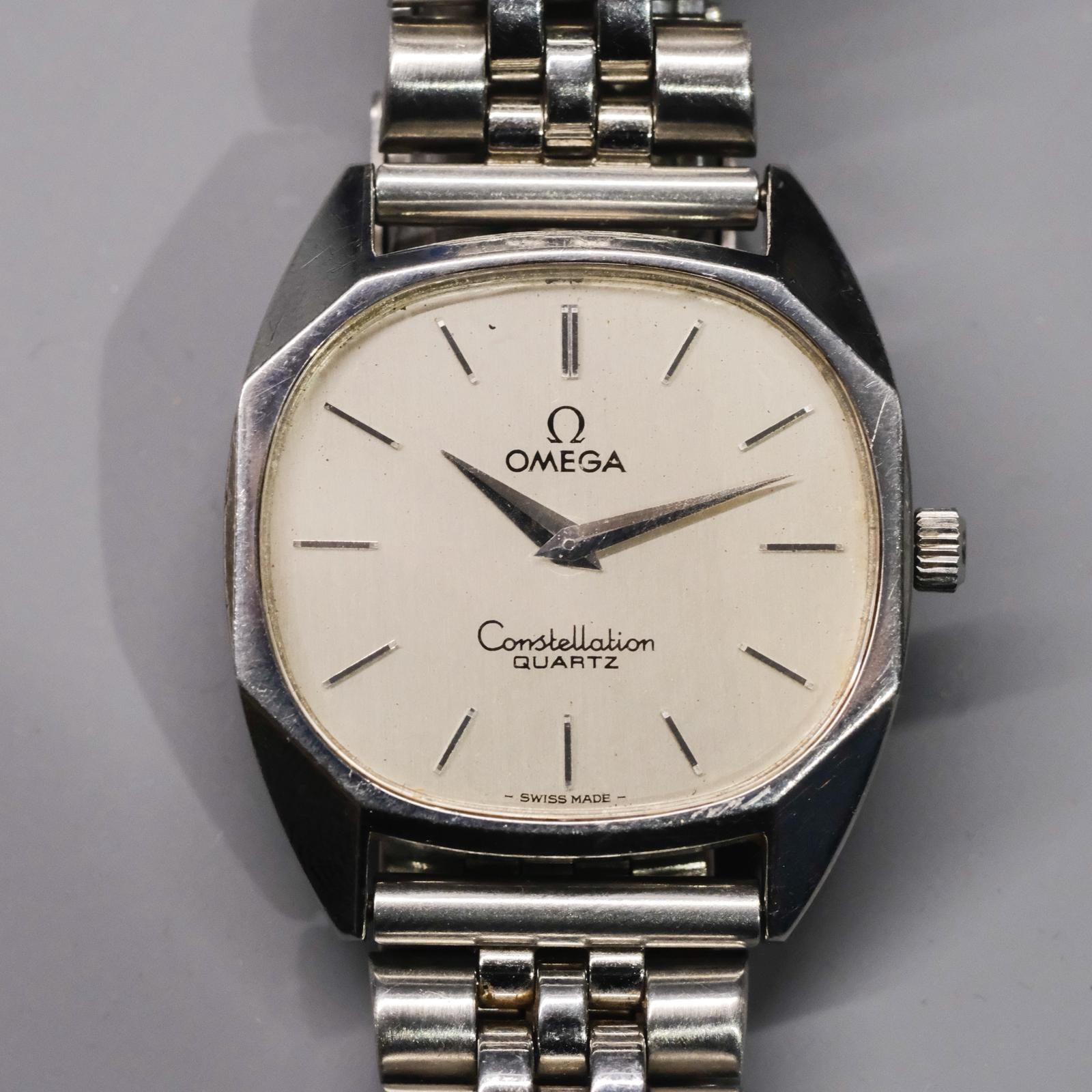
Something strange began happening in collector forums. Marine Chronometers started selling for twice their original price. Constellation Manhattans with caliber 1342—if working—became cult objects.
Why collect failures?
The Beauty of Brave Error
These watches represent something unique in history: the exact moment when the world’s most traditional industry tried to reinvent itself and failed spectacularly. They are monuments to misdirected ambition, to misunderstood innovation, to wounded pride.
A functioning Marine Chronometer today is a technical miracle. It survived its own obsolescence, the lack of spare parts, abandonment by its manufacturer. It’s David after losing to Goliath, but still standing.
Guide for the Brave Collector
If You Decide to Venture into Vintage Quartz
- Verify function BEFORE buying: A dead module is almost always irreparable
- The adjustment pin is your enemy: If it has “setting by contact,” assume it will fail
- Marine Chronometer = Holy Grail: Fewer than 6,000 made, impossible to repair, beautiful to behold
- Documentation is critical: Original manuals are worth their weight in gold
- Budget for impossible repair: Consider these watches as temporary functional sculptures
Models to Seek (or Avoid)
Seek with caution:
- Marine Chronometer ref. 198.0082 (blue square case)
- Constellation Manhattan early series
- Seamaster Quartz with caliber 1310
Avoid unless masochistic:
- Anything with caliber 1342
- Models without service documentation
- Pieces with forced crown (certain death)
The Quartz Lesson: When Losing is Winning
The story of Omega Quartz isn’t about watches; it’s about survival, adaptation, and dignity in defeat. These “failed” calibers forced Switzerland to rethink everything: its identity, its value proposition, its reason for existing.
Without the quartz trauma, the mechanical renaissance of the ‘90s wouldn’t exist. Without the Marine Chronometer, Omega wouldn’t have developed the Co-Axial. Without the cursed pin’s failure, we wouldn’t value the traditional crown.
Timeless elegance sometimes is born from epic failure. These watches are beautiful scars, reminders that even masters can fail magnificently. At KLASSE, we believe these pieces deserve respect not despite their defects, but precisely because of them.
Because in a world of digital perfection, a functioning vintage Omega Quartz is mechanical poetry: imperfect, problematic, absolutely human.
Cartas sobre relojería, de tanto en tanto.
Sin spam. Baja cuando quieras. Privacidad.