

The Watch That Survived Apollo 13: The Epic Story of Omega and Its Conquest of Time
April 14, 1970. 200,000 Miles from Earth
“Houston, we have a problem.”
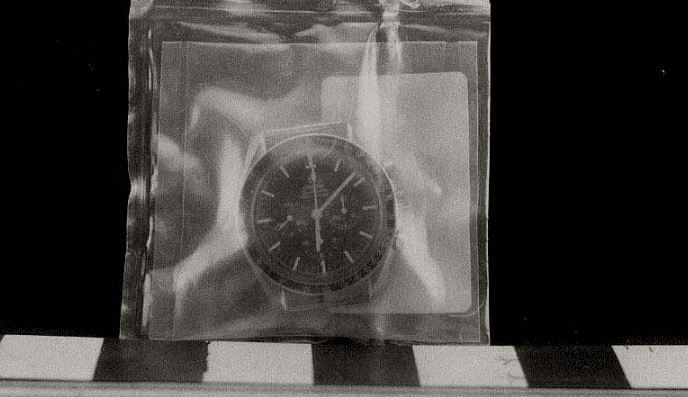
When the oxygen tank exploded on Apollo 13, the command module’s electronic systems were rendered useless. In that critical moment, with three lives hanging by a thread in the vacuum of space, astronaut Jack Swigert pulled out his Omega Speedmaster. During the next 14 seconds—the longest in space history—he manually timed the engine burn that would correct their trajectory and bring them home.
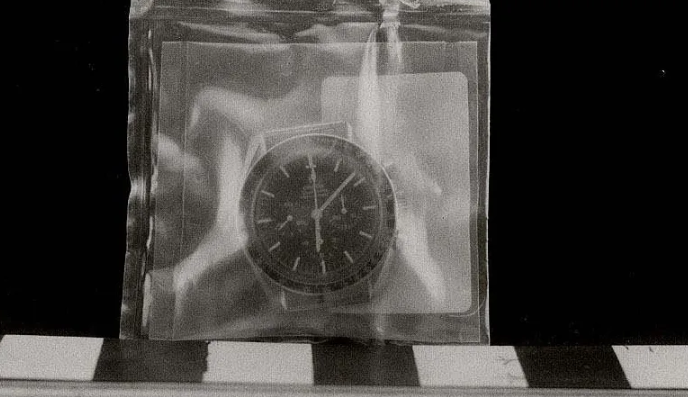
That mechanical hand-wound watch, without batteries or circuits, saved three lives. But the story of how a modest Swiss workshop came to be humanity’s chronometer at its most critical moment begins much earlier, in 1848, when a 23-year-old named Louis Brandt decided it was time to reinvent time.
From a Workshop in La Chaux-de-Fonds to the Final Frontier
Louis Brandt wasn’t a space visionary—human flight didn’t even exist in 1848. He was simply a young man with a talent for assembling pocket watches in La Chaux-de-Fonds, the Silicon Valley of 19th-century watchmaking. His small workshop grew thanks to an obsession: every component had to be interchangeable, a radical idea when each watch was a unique, irreplaceable piece.

The decisive moment came in 1894 with the 19-ligne “Omega” caliber. It was so revolutionary, so superior to everything existing, that the Brandt brothers (Louis had died, leaving the business to his sons) made a bold decision: they renamed the entire company after that movement. Omega—the last letter of the Greek alphabet, symbolizing absolute perfection, the end of the quest.
The Secret Race That Defined Space Exploration
1964: The World’s Toughest Exam
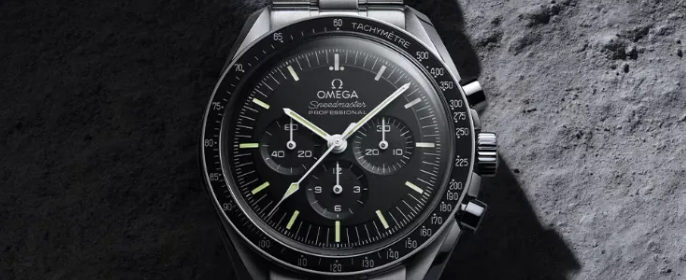
Few know that the Speedmaster wasn’t “chosen” by NASA; it was the sole survivor of a brutal battle. In 1964, the space agency needed a chronograph for the Gemini and Apollo missions. The selection process was merciless:
Rolex (the initial favorite): Its crystal broke in the pressure test Longines-Wittnauer: The crystal deformed under extreme heat Hamilton: Disqualified for submitting a pocket watch (seriously!) Omega Speedmaster: Survived everything
The tests were demonic: 48 hours at 160°F, followed by 4 hours at -0°F. 12G acceleration. Decompression in absolute vacuum. Vibrations that would destroy an engine. 95% humidity. The Speedmaster didn’t just survive; it kept running with chronometer precision.
The Watch That Didn’t Go to the Moon (But Saved the Mission)
Here’s a detail that changes everything: when Neil Armstrong stepped on the Moon, he wasn’t wearing his Speedmaster. He had left it in the lunar module because the onboard digital chronometer had failed. It was Buzz Aldrin who made the Speedmaster the first watch on the Moon.
But the Speedmaster’s most heroic moment wasn’t stepping on the Moon, but saving Apollo 13. Without functioning computers, that mechanical watch was the only precise instrument to time the critical engine burn. 14 exact seconds. Not one more, not one less. Three astronauts’ lives depended on a mechanism of springs and gears.
The Escapement That Broke 250 Years of Tradition
George Daniels and the Impossible Obsession
For 250 years, every mechanical watch in the world used the same type of escapement. It was as if every car in the world had used the same engine since 1750. Then came George Daniels, an English watchmaker obsessed with an idea: creating an escapement that barely needed lubrication.
Daniels worked 20 years on his Co-Axial escapement. When he perfected it in 1976, he knocked on the doors of every major Swiss brand. They all rejected it. It was too radical, too expensive to implement.
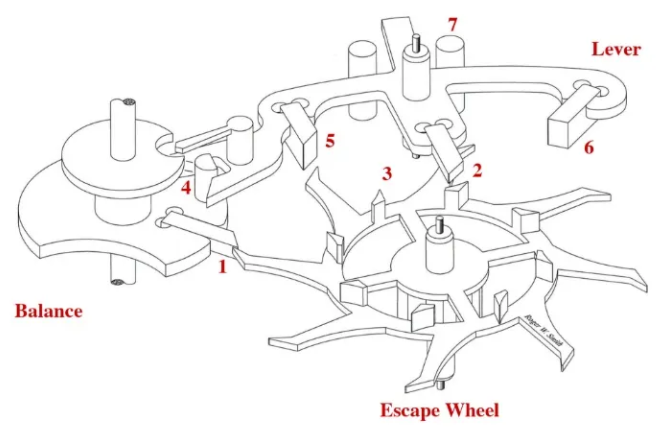
Except Nicolas Hayek of Omega, who saw what others didn’t: the first true revolution in mechanical watchmaking in two and a half centuries.
1999: The Year That Changed Everything
When Omega launched the first watch with Co-Axial escapement in 1999, it wasn’t just a new product. It was a declaration: traditional mechanical watchmaking could and should evolve. The Co-Axial escapement reduces friction by 50%, doubles service intervals, and maintains constant precision for years, not months.
Omega’s Best-Kept Secrets
The Invisible Logo
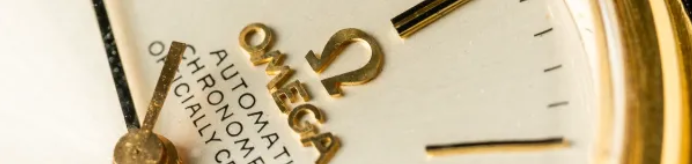
Take any vintage Speedmaster with Hesalite crystal. Under the right light, at the precise angle, a tiny Ω symbol appears engraved in the crystal. So small that many Omega watchmakers installed it upside down without realizing. It was a secret signature, a nod to connoisseurs.
The Venetian Hippocampus
Why is there a seahorse on Seamasters? In 1958, engraver Jean-Pierre Borle was vacationing in Venice when he saw gondolas decorated with hippocampi—mythological creatures half horse, half fish. He sketched it on a napkin. That doodle became one of watchmaking’s most recognizable symbols.
James Bond Wasn’t Marketing
When Omega appeared on Pierce Brosnan’s wrist in “GoldenEye” (1995), it wasn’t paid product placement. Costume designer Lindy Hemming insisted: “A British naval commander would wear Omega, not another brand.” Her father had served in the Royal Navy. All his colleagues wore Seamasters.
Master Chronometer: When “Good Enough” Isn’t Enough
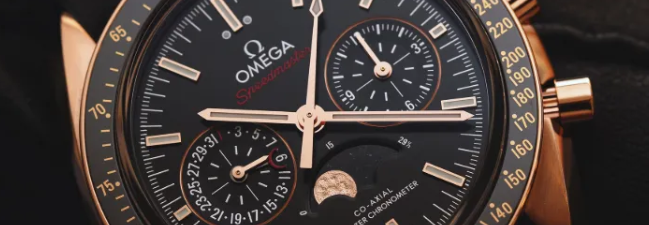
In 2015, Omega did something unprecedented: they created a certification standard stricter than the century-old Swiss COSC. The Master Chronometer tests not just the movement, but the complete watch. The pièce de résistance: 15,000 gauss of antimagnetic resistance.
To put this in perspective: a medical MRI generates 15,000 gauss. An Omega Master Chronometer can literally go through an MRI and keep functioning perfectly. In 2016, they took a prototype to 160,000 gauss—enough magnetic field to levitate a frog—and the watch kept ticking.
The Legacy of the Final Frontiers
Omega doesn’t make the world’s most expensive watches. They don’t boast about production limited to 10 pieces per year. They don’t need rappers showing them off in music videos.
What Omega has is something more valuable: humanity’s trust in its most critical moments. When we need to measure the Olympic record that defines an athlete. When we explore the deepest ocean trenches. When three men needed 14 perfect seconds to come home from space.
At KLASSE, when we hold a vintage Omega—whether a battered ‘60s Seamaster or an impeccable Constellation—we don’t just see a watch. We see an instrument that represents the best of human engineering: the relentless pursuit of perfection, not out of vanity, but out of necessity.
Because in the end, true timeless elegance isn’t about looking luxurious. It’s about functioning when it matters most. And in that, Omega has no equal.
Do you have an Omega with a story? Did you know your Speedmaster could survive an MRI? Share your experience with these Swiss icons in the comments.
Cartas sobre relojería, de tanto en tanto.
Sin spam. Baja cuando quieras. Privacidad.