

The People's Speedmaster: Why the Seiko 7A28-7010 Is the Most Important Watch You've Never Heard Of
1982: When a Japanese quartz redefined what it means to be a chronograph
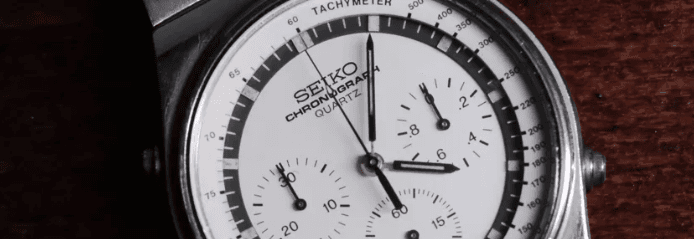
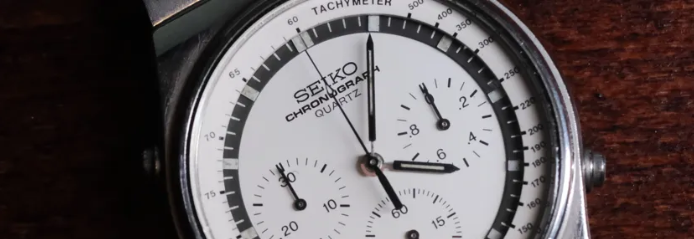
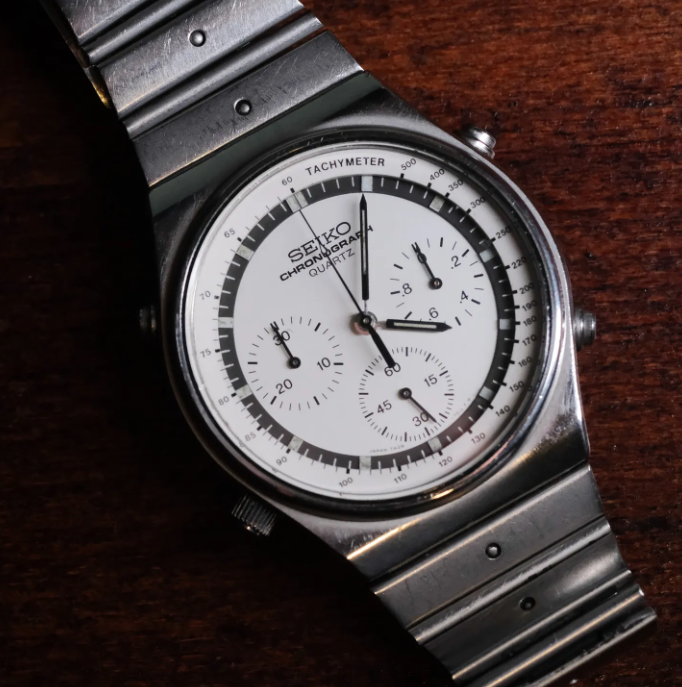
In 1982, while Switzerland struggled to survive the quartz crisis, Seiko quietly launched the 7A28: the world’s first analog quartz chronograph. It wasn’t digital with an LCD screen like its predecessors, but a classic chronograph with subdials and hands, powered by four independent motors and quartz precision. The 7A28-7010, with its white “panda” dial and black subdials, became the “Japanese Speedmaster”: all the aesthetics of a premium Swiss chronograph at a fraction of the price. Fully metal, with 15 jewels, modular and repairable, it defied the prejudice that quartz was disposable. Today, when an original example can cost €2,000, the 7A28 reminds us that true innovation doesn’t shout: it simply works better than everything before it.
The Day Seiko Rewrote the Rules (And Nobody Noticed)
Tokyo, October 1982. In the windows of Shibuya, a new Seiko appears that looks like any mechanical chronograph. White dial, three black subdials, tachymeter bezel. Passersby walk on. Just another chronograph in a sea of chronographs.
But Seiko’s engineers knew they had just achieved something that neither Omega, nor Rolex, nor TAG Heuer had imagined: a quartz chronograph that didn’t look like a wrist calculator. The 7A28 had real subdials with real hands, not blinking digits. Four independent stepper motors orchestrated a symphony of precision impossible in traditional mechanics.
The launch price in Japan: 35,000 yen. An Omega Speedmaster cost the equivalent of 250,000 yen. Seiko hadn’t just created the world’s first analog quartz chronograph; they had democratized watchmaking’s most coveted complication.
And almost nobody outside Japan noticed.
The Crisis That Birthed a Miracle
The Context: Switzerland Against the Ropes
To understand the importance of the 7A28, you must understand 1982. The Swiss industry was in freefall. Of 1,600 brands in 1970, fewer than 600 remained. Japanese quartz had destroyed the basic mechanical watch market. Swiss survivors retreated into extreme luxury or tried to compete with mediocre quartz movements.
Meanwhile, Seiko wasn’t resting on its Astron laurels (first quartz, 1969). The company understood something Switzerland didn’t: quartz wasn’t the enemy of watchmaking tradition—it was its natural evolution.
The Impossible Technical Problem
A mechanical chronograph is an engineering nightmare: hundreds of components, microscopic tolerances, years of manual adjustment. The first quartz chronographs (LCD/LED) solved this with digital displays, but lost their soul: nobody wants to stare at blinking numbers when they could watch hands dancing.
The 7A28’s challenge was titanic: create a chronograph with the aesthetics and functionality of a mechanical one, but with quartz precision and reliability. They needed to reinvent everything.
The Solution: Four Hearts Beating in Unison
Anatomy of a Revolution
The 7A28 movement is a masterpiece of minimalist engineering:
Four independent stepper motors:
- Motor 1: Main hours and minutes
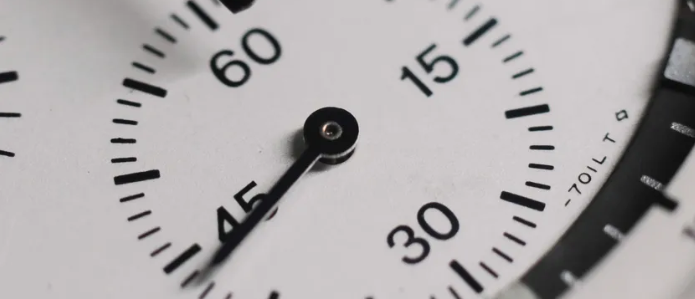
- Motor 2: Chronograph seconds
- Motor 3: Minute counter (30 min)
- Motor 4: 1/10 second counter
Each motor is independently controlled by the integrated circuit. No mechanical clutches, no column wheels, no complex cams. Pure electromechanical elegance.
15 synthetic jewels: Yes, jewels in a quartz. Because Seiko understood that friction kills precision, whether mechanical or electrical.
100% metal construction: No plastic. Fully disassemblable and repairable. A quartz built to last decades, not years.
Precision: ±15 seconds per month. A good mechanical chronograph varies ±15 seconds per day.
The 7A28-7010: The Panda That Conquered Hearts
Of all the 7A28 variants, the 7010 is the most coveted. Its “panda” configuration—white dial with black subdials—wasn’t coincidence. It was a direct nod to the Omega Speedmaster and Rolex Daytona “Paul Newman,” the world’s most desired chronographs.
But where those cost fortunes, the 7A28-7010 cost the equivalent of an average Japanese monthly salary. And it worked better.
Details that matter:
- Diameter: 39mm (perfect for the era)
- Crown at 8 o’clock (protected from impacts)
- Pushers at 2, 4, and 10 o’clock (visual symmetry)
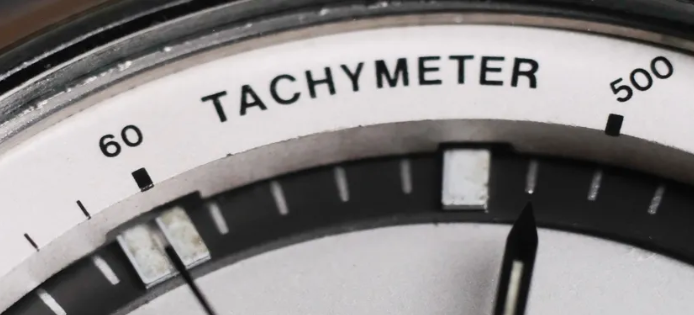
- Fixed tachymeter bezel (no weak points)
- Integrated flat-link bracelet (flowed with the case)
The Butterfly Effect: How a Seiko Changed Everything
The Swiss Response: Elegant Panic
When Swiss brands finally understood what Seiko had achieved, the response was revealing. TAG Heuer hurriedly launched quartz chronographs. Omega created the Speedmaster Reduced with a movement... based on Japanese designs. Even Breitling, bastion of the mechanical chronograph, introduced quartz lines.
But everyone arrived late. Seiko had set the standard: a quartz chronograph had to be as robust, precise, and beautiful as a mechanical one, but more accessible.
The Invisible Legacy
The 7A28 inspired generations of movements:
- 7A38: Added day and date
- 7A48: Incorporated moon phases
- 7T32: Alarm and second time zone
But more importantly: it legitimized quartz as serious technology. It was no longer the enemy of traditional watchmaking but its natural complement.
The Irony of Modern Collecting
From Despised to Desired
For decades, the 7A28 was invisible to serious collectors. “Just a Seiko quartz” was the verdict. While everyone chased Speedmasters and Daytonas, these revolutionary chronographs sold at flea markets for 50 euros.
Around 2015, something changed. Collectors began to understand what they had in front of them: the world’s first analog quartz chronograph, built like a tank, with timeless design. Prices exploded.
Today, an original 7A28-7010 in good condition can reach €2,000-3,000. More than many modern Swiss chronographs. The irony is delicious: the watch that democratized the chronograph has become elitist.
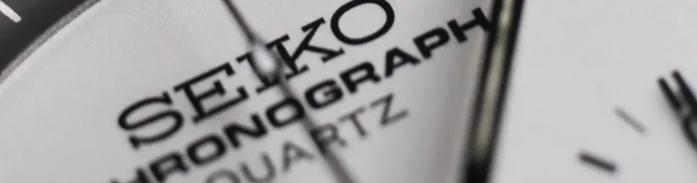
Survival Guide: Identifying a Genuine 7A28-7010
Five Verification Points
- Dial: DEEP subdials, not printed. Applied indices, not painted
- Serial number: 7 digits on the caseback, first digit = year (2=1982, 3=1983)
- Movement: Must say “7A28A” engraved, all metal, 15 visible jewels
- Crown: 8 o’clock position is exclusive to the original 7A28
- Weight: Heavy for its size, no internal plastic
Three Fake Red Flags
- Movement with plastic components = modern fake
- Printed subdials instead of recessed = redial
- Crown at 3 o’clock position = later fantasy piece
Why the 7A28 Embodies Timeless Elegance
The Beauty of Technical Honesty
At KLASSE, we admire watches that don’t pretend to be what they’re not. The 7A28 never pretended to be mechanical. It didn’t hide its quartz nature. It was simply the best quartz chronograph possible.
This technical honesty is pure elegance. No inflated marketing, no invented heritage, no artificial limited editions. Just superior engineering at a fair price.
The Luxury of Accessibility
The 7A28 perfectly represents our philosophy: true elegance doesn’t need to be unattainable. Seiko proved that extraordinary watchmaking could be done without elitism, that real innovation benefits everyone, not just millionaire collectors.
When we rescue and curate a vintage 7A28 at KLASSE, we’re not just preserving a watch: we’re preserving the radical idea that excellence can be democratic.
The Seiko That Keeps Teaching
Lessons for the Present
The 7A28 reminds us of uncomfortable truths:
- Real innovation is usually quiet
- Prestige and quality don’t always coincide
- The technically “inferior” can be functionally superior
- Time reveals true value
While today’s brands compete for useless complications and obscene prices, the 7A28 whispers from 1982: “Elegance is doing one thing perfectly, not many things poorly.”
The Panda That Doesn’t Roar
The 7A28-7010, with its serene panda face, doesn’t need to shout its importance. Like those Zen masters who changed the world without leaving their garden, this Seiko revolutionized watchmaking simply by being better.
It didn’t go to the Moon like the Speedmaster. It didn’t time F1 races like the Daytona. It just democratized excellence, quietly, efficiently, elegantly.
And 40 years later, when an executive with a €50,000 Rolex sees an original 7A28-7010, they often ask: “What watch is that?”
Because true timeless elegance needs no introduction. It just needs to work perfectly, decade after decade, without fanfare or pretension.
As we do at KLASSE: rescue history, sell elegance. And sometimes, just sometimes, the most important history is the one almost nobody knows.
Cartas sobre relojería, de tanto en tanto.
Sin spam. Baja cuando quieras. Privacidad.