

The Last Letter of the Alphabet: Why Omega Is Called Omega (And Other Secrets Nobody Told You)
Omega: The Caliber That Became a Brand
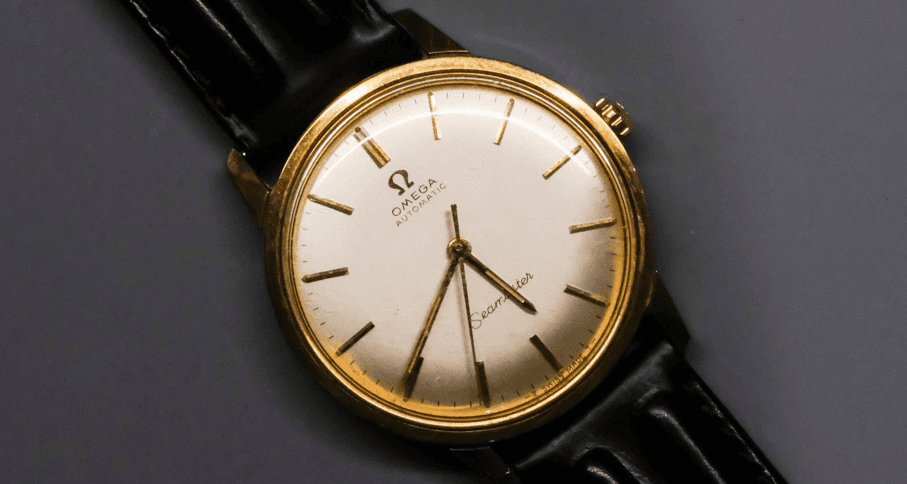
From the Lucky Horseshoe to Spanish Cases: The Hidden History of Omega
In 1894, a watch movement changed Swiss industry so profoundly that its creators decided to name the entire company after it. That caliber was called “Omega”—the last letter of the Greek alphabet, symbol of culmination and perfection. This story traverses the lesser-known secrets of one of the world’s most iconic brands: why the logo changed to red in the 70s, what the mysterious “horseshoe” that collectors seek in vintage models really is, how Omega armed Spitfire pilots during World War II, and why in Spain there existed Omegas with “Spanish cases” that almost nobody wants today. The difference between knowing Omega and understanding Omega lies in these details.
THE CALIBER THAT ATE THE COMPANY
La Chaux-de-Fonds, 1894.
Louis-Paul and César Brandt, sons of founder Louis Brandt, present a new 19-ligne movement. It’s not just another caliber. It’s a silent revolution.
For the first time in Swiss watchmaking history, a complex movement can be completely disassembled and reassembled using interchangeable components manufactured in series. Every piece fits with any other from the same batch. Every wheel, every jewel, every screw has tolerances so precise that a watchmaker in London can repair a watch made in Bienne using replacement parts without manual adjustment.
This seems obvious today. In 1894, it was science fiction.
The Brandt brothers christen the movement with the last letter of the Greek alphabet: Ω. Omega. “The end.” “The culmination.” “The definitive.”
The message was clear: this caliber represents the final state of perfection in the pursuit of chronometric precision.
The success was so resounding that in 1903 the company stopped calling itself “Louis Brandt & Frère” to adopt the name of its most famous creation. The caliber had eaten the company. Omega Watch Co. was officially born.
“Few brands can say their name comes from a product so good it eclipsed everything else.”
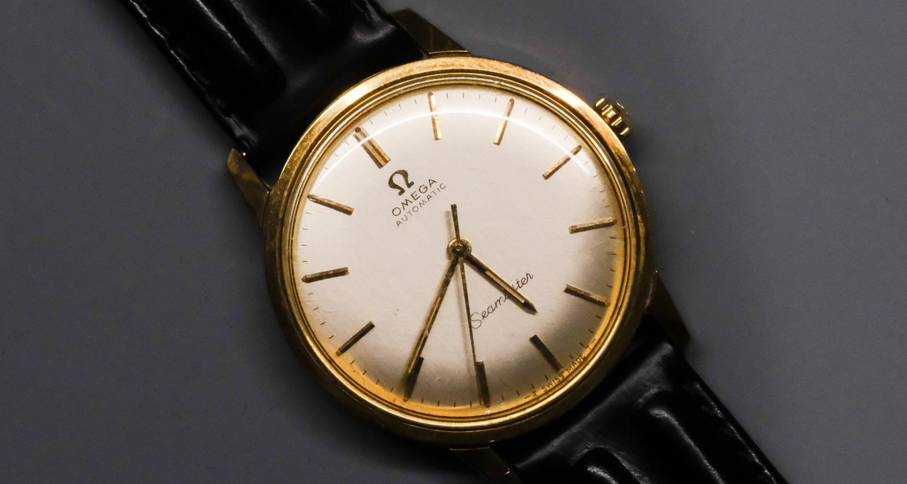
THE RED SYMBOL: MORE THAN AESTHETICS
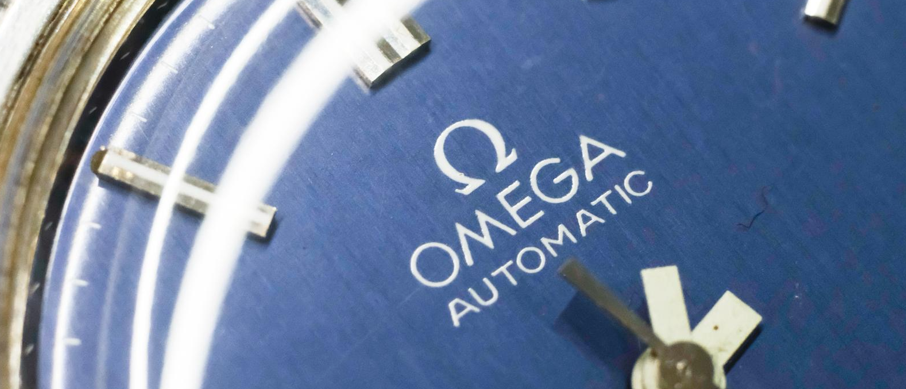
For over 70 years, the Omega logo remained essentially intact: a thin-stroke stylized Ω over the word OMEGA in capitals, with a sober typography that retained a small sharp serif on the “G”—echoes of early century Art Nouveau styles.
- Everything changed in 1974.
The outlines were thickened. Curves were smoothed. The serif on the “G” was eliminated. And scarlet red was adopted as the corporate color.
- Why red? It wasn’t aesthetic whim.
In the 70s, Omega was intensifying its role as official Olympic timekeeper and had just participated in Apollo missions. Red conveyed energy, sporting dynamism, cutting-edge technology. It was a deliberate repositioning: less “classic bourgeois,” more “extreme performance.”
The logo has barely changed since. Thickness variations by medium, digital adaptations, but the base 1974 design remains. When you see that red Ω, you’re seeing a marketing decision from 50 years ago that worked so well nobody dared touch it.
THE LUCKY HORSESHOE: MYTH AND REALITY
If you frequent vintage collecting forums, you’ve heard of “Omegas with the lucky horseshoe.” It sounds like urban legend. It isn’t entirely.
- What it really is
The “horseshoe” is a U-shaped metal movement holder ring that surrounds the caliber in certain mid-century models. Its function is purely technical:
Center small movements in larger diameter cases. Securely hold the caliber against the screw-down caseback. Act as a partial antimagnetic shield.
In the 1940s-60s, Omega reused relatively small calibers (especially the 30mm family) inside cases of different sizes. The “spacer” or movement holder with teeth allowed housing the same movement in multiple references without constantly redesigning the chassis.
It was industrial modularity. Nothing romantic.
- Where the myth comes from
Collectors saw in that curved ring with notches something very similar to a classic horseshoe. And since the horseshoe is a symbol of good luck in European tradition, the nickname stuck: “Omegas with the lucky horseshoe.”
Omega never institutionalized this reading. But the term remains in vintage jargon, especially for certain Seamasters, Rancheros, and military models where this robust movement holder is common.
A technical detail reinterpreted as a talisman. That’s collecting.
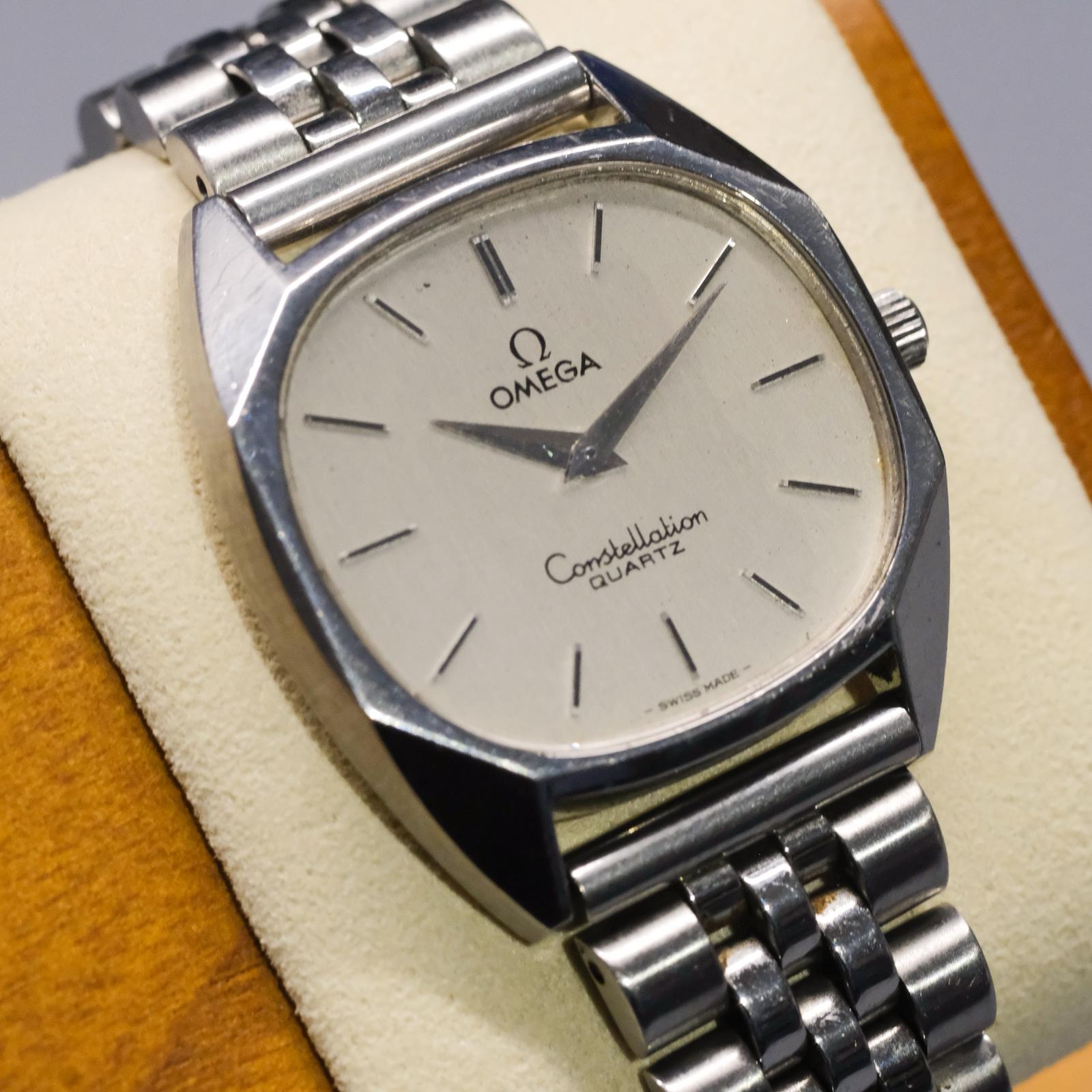
110,000 WATCHES TO DEFEAT HITLER
During World War II, Omega was one of the main watch suppliers to Allied forces. Historical studies cite over 110,000 units delivered to the British Ministry of Defence alone.
- The Spitfire pilots’ watch
Reference CK 2292 was a pilot and navigator watch equipped with the 30mm caliber that had already broken records at Swiss observatories. But it had something special: extreme magnetic resistance thanks to a new hairspring material.
Why did it matter? Spitfire and Hurricane pilots sat centimeters from engines generating brutal magnetic fields. A normal watch went completely haywire. The CK 2292 kept working.
- The Swiss paradox
Switzerland remained officially neutral during the conflict. This generates confusion: Did Omega also sell to the Nazis?
Historical documentation is clear: Omega centered its military production on the UK and Allies. There’s no evidence of comparable direct contracts with German armament. Nazi demand was covered primarily by German brands.
Rumors about “Nazi relations” arise from a simplified reading of Switzerland’s role as a country that traded with both sides. But in Omega’s specific case, their historical image consolidates as a key supplier to the Allied effort, especially British.
Those calibers that had broken precision records at observatories were now synchronizing bombing raids over Berlin.
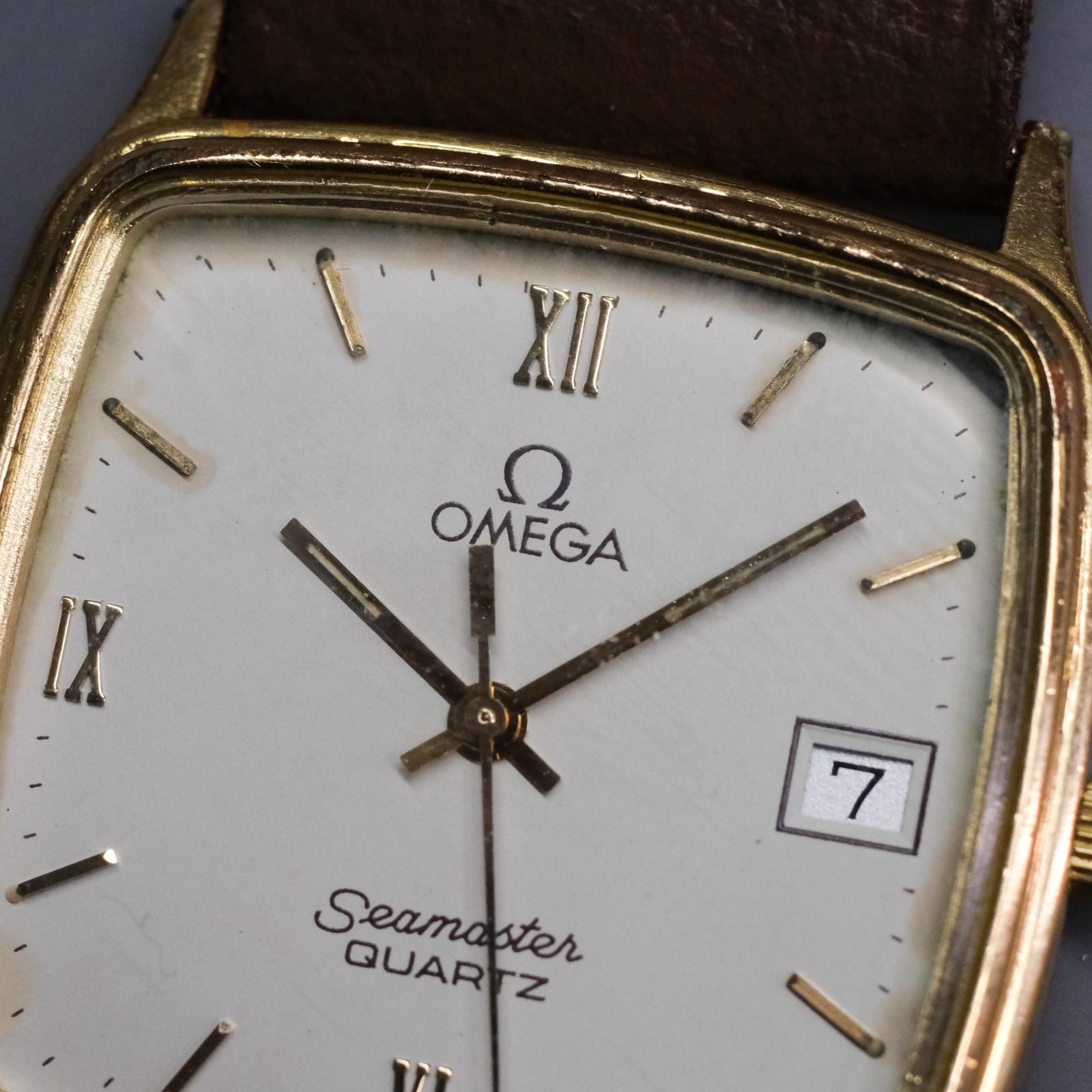
SPANISH CASES: THE OMEGA ALMOST NOBODY WANTS
This is the story that vintage sellers in Spain would prefer you didn’t know.
- What is a “Spanish case”
An Omega with a “Spanish case” mounts original Swiss movement, dial, and hands, but a case manufactured in Spain by a local jeweler or goldsmith.
The complete watch was assembled in Spanish territory using Omega “fornitura” (mechanics + dial) inside a national case, instead of the original Swiss case.
- Why it existed
Until the late 20th century, complete gold watches imported to Spain were taxed with a “luxury tax” and very high tariffs. The ingenious solution:
Import the watch as “fornitura” (caliber + dial), with lower tax burden. A Spanish jeweler manufactured the gold case. The customer obtained a “gold Omega” with Swiss heart, avoiding much of the tax.
The practice was significant between the 1950s and 70s. When the tax disappeared, the economic necessity ceased.
- How to identify them
Original Swiss caseback: Swiss gold hallmarks, Omega emblem engraved, “Swiss Made” inscription and case reference.
Spanish case: Only Spanish gold hallmark (national contrast mark), no Omega logo or model references, finish and proportions sometimes different from typical design.
- The value problem
In international collecting, the Spanish case is valued very little. The appeal of vintage Omega lies in the originality of the complete set, including the factory-referenced case.
A national case is perceived as a “functional graft” valid in its historical context, but not as part of the Omega design. The result: these cases are valued practically at gold weight. Horological value concentrates exclusively in the caliber and dial.
If you’re offered a vintage gold Omega at a suspiciously low price in Spain, ask about the case hallmarks. The answer may explain the discount.
WHY THIS MATTERS
Knowing Omega is knowing they made the Speedmaster that went to the Moon. Understanding Omega is knowing why it’s called that, what that red Ω really means, why some models have the “horseshoe” and others don’t, and what story a Spanish hallmark tells on a case that should be Swiss.
The difference is in the details. Always.
At KLASSE we believe every vintage watch deserves to be understood, not just owned. Because when you know where a piece comes from—its industrial context, its military history, its local peculiarities—you stop having an object and start having a fragment of mechanical history on your wrist.
And that’s priceless. Or it has a price, but it’s a different one.
Cartas sobre relojería, de tanto en tanto.
Sin spam. Baja cuando quieras. Privacidad.